
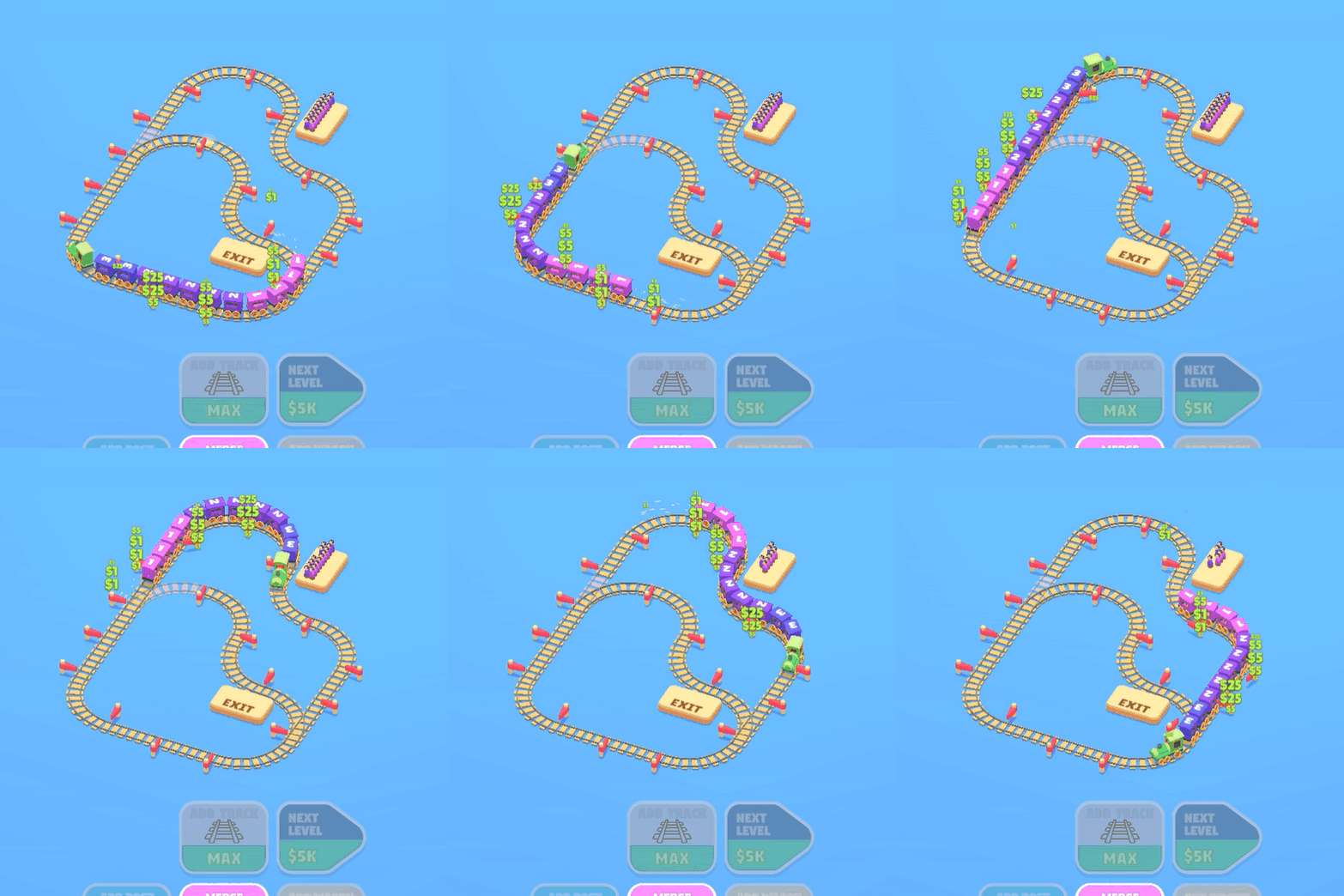
Technical Analysis: IdleTrain – Incremental Railway Management System
IdleTrain is a sophisticated idle/incremental mobile game developed in Unity 3D, focusing on railway management, passenger transportation, and exponential progression mechanics. This project demonstrates advanced implementation of complex game systems, mathematical balancing, and performance optimization techniques for mobile platforms while maintaining engaging idle gameplay mechanics.
Architecture and Design Patterns
IdleTrain's architecture was meticulously designed using proven software engineering principles to ensure scalability and maintainability. We implemented the State Machine Pattern to manage core game flow transitions (Start → Game → End), providing deterministic state management and simplified debugging workflows. The Singleton pattern was strategically employed for the central Game_ class, creating a unified access point for all critical systems including Audio_, Particle_, UI_, Camera_, and SaveSystem_. A Component‑Based Architecture was fundamental: each entity (Train_, Wagon_, Passenger_, Station_) operates as an independent, modular component with clearly defined responsibilities.
Procedural Movement and Pathfinding System
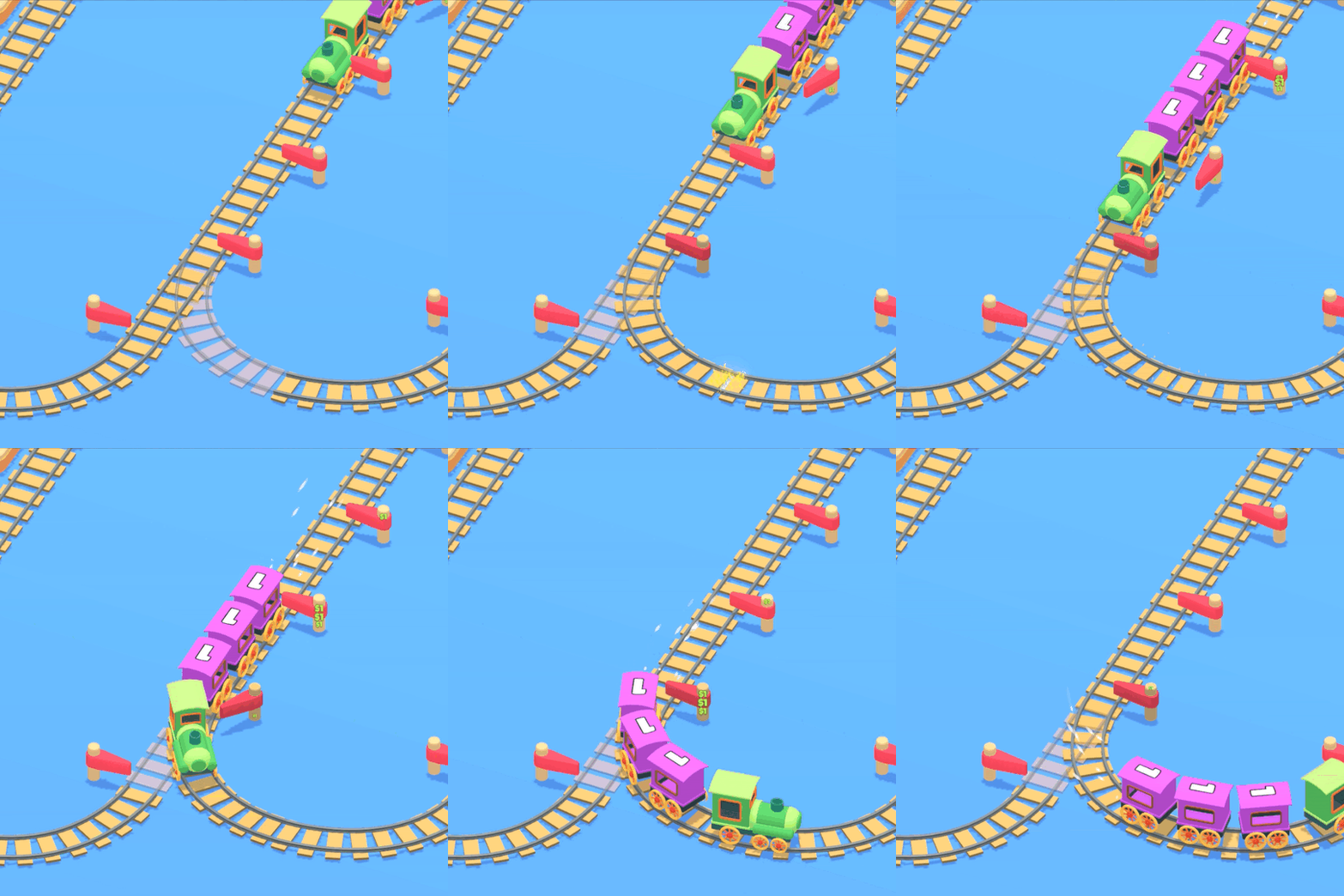
We developed a sophisticated movement system using Bézier curves (LTBezierPath) for smooth, natural train movement along complex railway tracks.
public void CalculateTrack(TrackSegment_ startSegment) {
    // Dynamic pathfinding with bezier curve regeneration
    bezier = new LTBezierPath(pathPoints);
    Game_.instance.rule_.train.ratio = bezier.ratioAtPoint(pointRatio);
}The system implements: ratio‑based positioning (0‑1 normalized), dynamic path recalculation at forks, and real‑time bezier interpolation for fluid movement across varying track geometries.
Intelligent Merge and Upgrade System
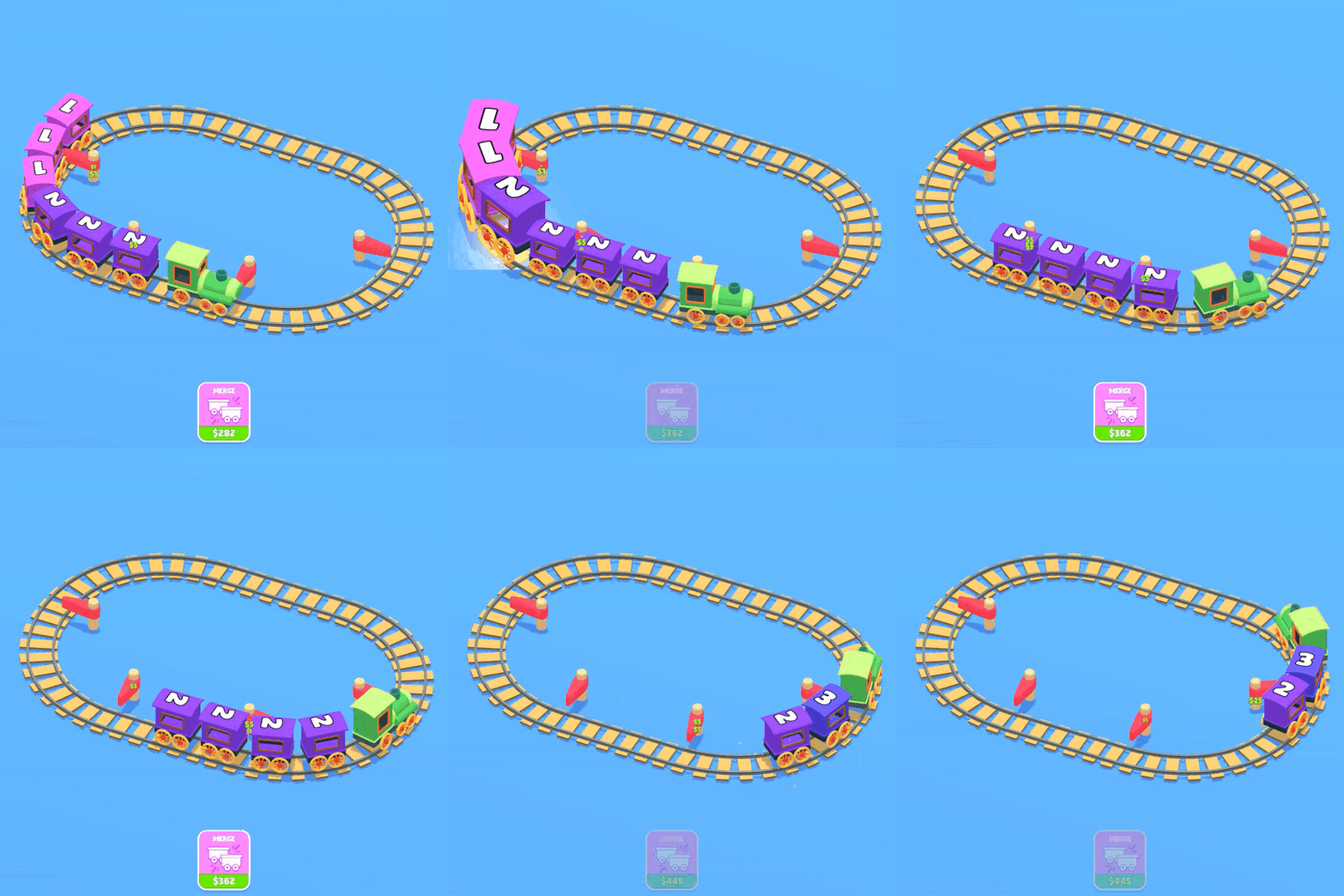
We implemented a complex 3‑to‑1 merge algorithm with automatic detection and level progression.
public bool CanMerge() {
  for (int i = 0; i <= maxLevel; i++) {
    for (int j = 0; j < wagons.Count; j++) {
      if (wagons[j].Level == i && wagonsToMerge.Count < 3) {
        wagonsToMerge.Add(wagons[j]);
      }
    }
  }
  return wagonsToMerge.Count == 3;
}Economic balancing through exponential pricing formulas:
public ulong PriceFormula(float A, float B, float C, int level, int trackMultiplier) {
    level = level + (trackMultiplier * Game_.instance.data.track);
    return (ulong)(A * Mathf.Pow(level, 2) + (B * level) + C);
}Dynamic Economy and Progression Balancing
The economic system features mathematically balanced progression curves: multi‑variable upgrade pricing with quadratic scaling, real‑time money‑per‑second calculation using sampling algorithms, track‑based difficulty scaling per level, and passenger value exponential scaling (10 × 5^passenger_level).
Robust Save/Load and Data Persistence
We developed a comprehensive data persistence system with JSON serialization for cross‑platform compatibility, automatic data validation and migration between game versions, debounced auto‑save to prevent performance spikes, and data integrity checks ensuring save file consistency.
Advanced Audio System Implementation
Dynamic audio with real‑time pitch modulation based on train speed.
float pitch = Mathf.Lerp(minPitch, maxPitch, speed / maxSpeed);
audioSource.pitch = pitch;Optimizations and Performance
- Object Pooling: Dramatically reduced GC for frequently spawned UI elements and particles.
- Coroutine‑Based Async: Non‑blocking boosts and UI animations.
- Efficient Component Caching: Eliminated costly GetComponent() in Update loops.
- Dynamic Camera Management: Smooth transitions with mathematical interpolation.
Complex Technical Challenges Resolved
- Exponential progression curves balancing long‑term engagement while preventing exploits.
- Multi‑object Bézier positioning with accurate spacing and rotation.
- Memory lifecycle management preventing leaks during extended idle sessions.
- Cross‑version save compatibility with validation/migration.
- Real‑time economic metrics without impacting frame rate.
Technical Metrics and Results
Consistent 60 FPS on mid‑tier mobile devices; Memory footprint < 180MB during peak gameplay; Load times < 3s for transitions; Zero memory leaks in 8h+ sessions; Sub‑100ms save operations with debouncing.
The modular architecture enables high scalability, excellent maintainability, and robust error handling, showcasing competencies in advanced software architecture, mobile optimization, complex balancing, idle progression design, and SDK integration.